

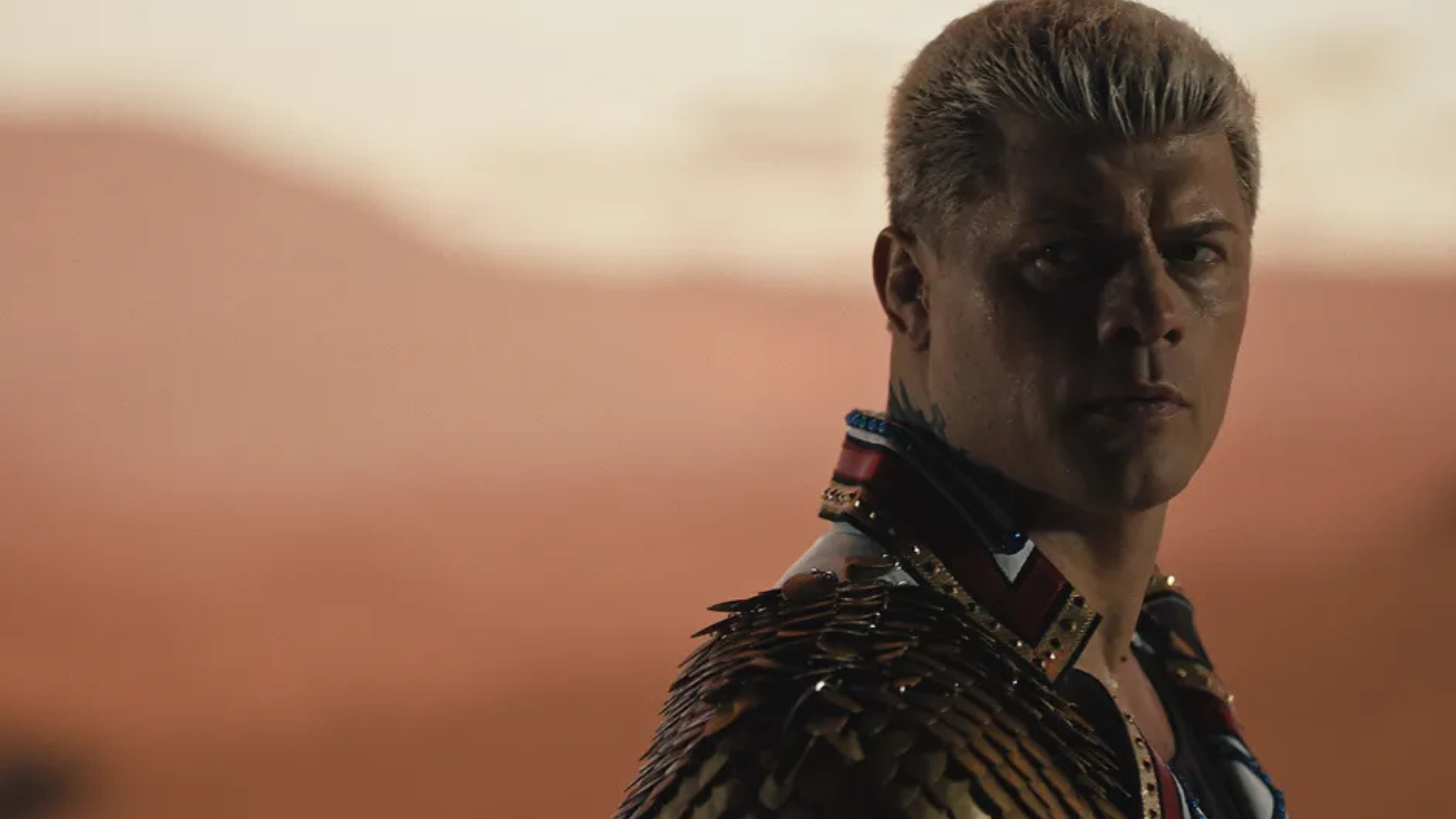
Cody Rhodes in “American Nightmare: Becoming Cody Rhodes” via PEACOCK
He may be the best actor in the room.
The following content reflects my personal opinion and should be interpreted as such. Any views expressed here are solely mine and do not represent any official stance. This opinion piece is intended for entertainment and discussion purposes only, and should not be construed as factual information or professional advice. Reader discretion is advised.
“He’s too safe—too perfect. And the world is getting a little bored.”
That’s one of the first thoughts that comes to mind when I think about the current state of Cody Rhodes’ persona.
The Golden Boy era is officially upon us, and I’m not entirely sure this is what we wanted from Cody.
Success has never been a Cody Rhodes problem. But success might be the very thing that breaks him.
Cody returned to WWE as the prodigal son. But somewhere along the way, the prodigal son started to look less than an underdog—and more like the chosen heir.
He didn’t return humbled. He returned validated: a proven star, beloved by the fans, with momentum already behind him. And WWE immediately placed him at the top of the card.
Think about it.
We watched the champion return to WWE with sky-high expectations and big, dreamy eyes, chasing the Undisputed WWE Championship — a title that, at the time, was held by our Tribal Chief, Roman Reigns.
Eventually, Cody achieved that dream, but not before failing in his first attempt in 2023.

He regrouped, won the Royal Rumble for a second time the following January, and challenged Roman again.
But this time, Cody didn’t have just Roman Reigns to deal with. He was now face-to-face with the High Chief and WWE/TKO board member, Dwayne “The Rock” Johnson. Another grueling battle, orchestrated by Roman and his family, meant to discourage and stop Cody from pursuing the Undisputed WWE title. But despite, the public beating and threats to Mama Rhodes, Cody did finish his story. And in doing so, he made history at WrestleMania 40, becoming the first member of the Rhodes family to win WWE’s top championship.
WrestleMania 41 presented a completely different landscape. This time, Cody entered his fourth Wrestlemania main event— as champion. A feat that almost feels inevitable for someone like him. But Cody didn’t fulfill his dream by successfully defending his title at WrestleMania. No. Instead, he dropped the championship to John Cena, who captured a historic world title win —”The Never Seen 17“— months after announcing that he would retire from professional wrestling following 25 years in the business.
Okay. Cody loses his first WrestleMania title defense. Fine.
Let’s run it back… in Las Vegas.
Again.
Cena would eventually lose the title to the last man who held it — Cody Rhodes — and just like that, the world felt like it had returned to its rightful axis.
But then something happened that temporarily altered the trajectory of Cody’s original story.
Drew McIntyre.
Drew had spent years chasing the kind of success Cody seemed to find overnight. And to Drew, that success didn’t feel earned—it felt handed to him.
So now the Scottish warrior has set his sights on Cody, and the feud began with a strong impact on the budding Golden Boy era—an effect we didn’t quite see coming until now. Drew, carrying two unsuccessful title reigns under his belt, felt like Cody was getting everything he himself had been fighting for. Some might call it jealousy. Others might see it as the frustration of a man who has been wronged more times than he can count.
Either way, Drew decided he was going to grab destiny by the throat— and take Cody’s belt.
And he did.
On a random episode of Smackdown, in a brutal Three stages of Hell match, with an unexpected assist from Jacob Fatu.

Just like that, Cody had lost his title for the second time in under six months.
Drew had successfully regained the championship he had chased for years, and Cody, as always, was a good sport about it. But just like before, Cody’s pursuit of the title was not going to be an easy one.
Because his loss to Drew wasn’t clean. With interference playing a role in the finish, Cody believed the path back to the championship was inevitable—especially since WWE championship contracts traditionally include an automatic rematch clause for the former champion. Or so he thought.
Because of Drew’s mind games—and Cody’s own eagerness to regain his title—he missed the fine print in the stipulation: if Cody lost, he would not receive his guaranteed rematch.
Drew made sure Cody’s road back to WrestleMania became as difficult as possible, costing him opportunities at both the 2026 Royal Rumble and the Elimination Chamber.
The twist in the story didn’t stop there. Randy Orton winning the Chamber match over Cody carried its own layer of history.
After all, Randy was the man Drew defeated to win his first WWE Championship in 2020. But at the same time, WWE had quietly been teasing tension between the Viper and Cody since their on-screen inception over two years ago—a slow-burn story fans had been watching closely.
But something else happened during all of this. The crowd began to shift. Not dramatically. Not overnight. But slowly, almost imperceptibly, the overwhelming support that once followed Cody Rhodes everywhere he went began to cool.
And that may be the most important development of this entire story. Because the Golden Boy version of Cody Rhodes — the flawless hero who always says the right thing and does the right thing — may be reaching its expiration date.
But has any of it truly changed the way fans see Cody Rhodes? Or has it only reinforced the growing perception that he’s less the underdog hero—and more the nepo baby with the favor of WWE’s decision-makers?
Even as the crowd’s energy toward Cody began to shift, the story itself continued to move forward. In an unexpected turn—and by decision of SmackDown General Manager Nick Aldis—Cody was granted his rematch against Drew, ultimately regaining the Championship in a Twilight Zone-esque repeat of history.
On a random episode of SmackDown, the American Nightmare defeated Drew with the unexpected assist of Jacob Fatu. Almost as if the universe had corrected itself after that fateful night in January.

Drew’s third title reign suddenly felt like a fever dream, with Cody Rhodes once again standing as champion.
Which brings us to WrestleMania 42.
Cody walks into WrestleMania as champion for the second time in his career, set to defend the title against Randy—a match packed with history, friendship, tension, and a story that WWE had quietly been building for over two years. The question now becomes simple.
Will Cody be successful this time?
And how would someone define “success” when they think of Cody?
Maybe by mentioning his victory over Roman, ending the Tribal Chief’s historic 1,316-day title reign—a feat both Randy and Drew failed to accomplish. Maybe it’s the fact that Cody has already main-evented WrestleMania four times in three years, became the inaugural Men’s Crown Jewel Champion, and won the Royal Rumble in both 2023 and 2024.
Even when the possibility of Cody headlining WrestleMania seemed out of reach—after losing both his chances at the Royal Rumble and Elimination Chamber—he still managed to find his way back onto the road of the biggest show of the year, facing his lifelong mentor and friend, Randy Orton.
Success has been synonymous to Cody’s career since his return in 2022.
So why wouldn’t he win at WrestleMania 42?
Or maybe the better question is: why should he?
For the last four years, fans have followed Cody’s story of redemption and, for a long time, they were fully behind him. His return represented a shift in WWE’s landscape at a time when the company felt firmly locked in the grip of Roman Reigns and the island of Relevancy. Cody represented change.
From Dashing Cody Rhodes and Stardust to the American Nightmare, Cody’s rise has been defined by opportunity—almost every major one seemingly placed within reach. For some fans, that journey began to look less like perseverance and more like the company positioning him as its chosen son.
But how has that perception affected Cody’s relationships with the very people he shares the ring with?
Being the top champion comes with expectations: carrying the company on his back, leading the locker room, and standing at the front of the line—all while being watched and challenged by the very peers fighting for that same spot.
Drew McIntyre wasn’t the first man to try to slow Cody down or humble the champion. In fact, he wasn’t even the first to openly question the sense of entitlement surrounding him and his title opportunities.
That distinction belongs to Kevin Owens.

Kevin’s feud with Cody stemmed from what he saw as hypocrisy on Cody’s part. After defeating Roman at WrestleMania 40, Cody was on top of the world as the new Undisputed WWE champion. But it would be a few short months later, Cody and Roman were no longer standing across the ring from one another—they were standing side by side, working together against Solo Sikoa and the new Bloodline.
For Kevin, that moment changed everything.
How could someone so quickly align themselves with the very man who had tormented all of them for years?
The same man—and the same family—that had put Cody through months of psychological and physical warfare?
These were questions Kevin had no issue asking.
KO accused Cody of betraying their friendship by helping the very force that has once been used against them. The confrontation escalated quickly. What started as a heated backstage altercation—captured unexpectedly by fans outside of the arena—soon spiraled into a months-long feud between two former friends.
For Kevin, the betrayal was expressed physically.
But for Cody, it had to have cut much deeper.
Just three months earlier, Kevin—alongside Randy, Jey Uso, Sami Zayn, LA Knight, and John Cena—had stood in the ring celebrating Cody’s triumph, lifting him onto their shoulders after his historic victory.
Moments like that are supposed to symbolize unity.
Instead, they would eventually become the beginning of a long line of betrayals.
While the feud between Kevin and Cody started to boil over, there was one man caught in the middle from the start—the Viper.
Randy tried to be the voice of reason between two friends who suddenly found themselves on opposite sides of the ring. To him, the conflict seemed like something that could be fixed. But even he wasn’t immune to the growing frustration surrounding Cody.
Caught in the crosshairs of Kevin’s anger, Randy became collateral damage when KO delivered a piledriver—a move banned in WWE—during a confrontation in the ring. The attack left Orton sidelined for four months with cervical cord neurapraxia.
With Randy gone, the last voice of reason between Cody and Kevin disappeared. And the feud only escalated from there.
As the quarrel between the two men grew more personal, it became clear that Kevin’s motives weren’t rooted solely in the betrayal he believed Cody had committed against him.
Kevin was jealous of his friend.
To him, Cody’s success looked almost effortless. Cody had returned and accomplished what others before him couldn’t—defeating Roman and ending his three-years title reign.
However, Kevin believed he saw something that many fans either couldn’t—or chose not to see.
A different side of Cody.
A side that lingered just beneath the surface, hidden in plain sight. A more manipulative, calculating version of Cody Rhodes that threatened the image he had worked so hard to maintain.
And Kevin wanted to strip that image away.
He wanted to take everything from his former friend. Including something both Cody and the fans desperately wanted to see return: the Winged Eagle Championship.

When Cody unveiled the title at Saturday Night’s Main Event, Kevin saw an opportunity to strike. During their match that night, Owens brutally attacked Cody and walked away with the Winged Eagle Championship, declaring himself the real Undisputed WWE Champion—a sign that his obsession with Cody had pushed him over the edge.
The symbolism of the Winged Eagle meant something far deeper to the champion. His father, Dusty Rhodes, had never held the WWE Championship, and Cody had long spoken about wanting to bring that title design back if he ever reached the top of the company.
But Kevin took that moment from him. And he carried the Winged Eagle Championship for weeks until Cody finally reclaimed it at the 2025 Royal Rumble, defeating him in a ladder match.
By then, the damage had already been done. Owens had fully cemented himself as a villain in the story—becoming the first of three men who would ultimately turn against Cody Rhodes.
With Kevin now out of the way, Cody turned his focus to his next opponent. As champion, he waited to see who would emerge victorious and earn the right to face him at WrestleMania 41. Right on cue—John Cena.
Although KO’s betrayal didn’t slow Cody’s momentum, John turning on him at Elimination Chamber should have been the moment Cody realized he had become public enemy number one.
For the second year in the row, The Rock played a role in Cody’s road to the WrestleMania main event. But this time, The Rock wanted something from Cody—his soul—promising that if he accepted, Cody would receive everything his heart desired.
Cody refused.
And that decision came with consequences.
In a shocking twist, John Cena turned on Cody, leaving him in a bloody heap with the help of The Rock—and an unlikely accomplice, Travis Scott.
One could argue that The Rock may have been the second person, after Kevin Owens, to recognize the side of Cody that lies just beneath the surface. Perhaps that’s why he wanted his soul in the first place. But Cody fought the temptation. And in doing so, he paid the price.

Cena didn’t just betray Cody physically—he attacked the very image the champion had spent years building. In a scathing promo leading into WrestleMania, the 16-time world champion accused Cody of manipulating his way to the top and hiding behind a carefully crafted persona. According to John, the American Nightmare wasn’t the authentic hero fans believed him to be. Instead, he was “too perfect, too polished, too rehearsed,” a man who had stitched together pieces of other legends—including his father— while still being “afraid to show” who he really was. To John, Cody wasn’t the savior of WWE—he was someone hiding behind a mask of perfection, hoping the crowd would never look close enough to see what lay underneath.
John didn’t mince his words, accusing the champion of stealing his blueprint and every secret needed to be undeniable. As he saw it, Cody had spent years studying him—yet still hadn’t discovered who he himself truly was.
“I tried to drill it into your egotistical skull: you have to be authentic because they can see through phony. You didn’t listen and it shows. Cody Rhodes does not look like me, he doesn’t act like me and he sure as hell doesn’t work like me. But Cody Rhodes, also, you don’t look like you, you don’t act like you and you don’t work like you because after all these years, you are still afraid to show who you are.”
Cena’s words echoed a sentiment that had already been voiced months earlier by Kevin Owens. Two very different rivals, both pointing to the same unsettling possibility: that the version of Cody Rhodes fans had come to celebrate might not be the whole story. To them, the champion wasn’t simply the heroic underdog who fought his way back to the top. He was something more complicated—a man who had studied the blueprint of greatness, learned every trick of the trade, and built a character polished enough to convince the world he was exactly who they wanted him to be.
And if Cena was right, then Rhodes wasn’t just the Golden Boy of WWE.
He may be the best actor in the room.
Going against The Rock did cost Cody another ally in John Cena—and eventually, the Undisputed WWE Championship at WrestleMania 41.
Cody would eventually get his revenge. At SummerSlam, he defeated John to reclaim the Undisputed WWE Championship, beginning his second reign at the top. But the victory didn’t come without controversy. During the match, Cody relied on questionable tactics to secure the win—an uncharacteristic edge that raised more than a few eyebrows.
The celebration didn’t last long. Drew soon forced his way back into the picture, briefly taking the title from Cody before the champion once again fought his way back to reclaim it. Which should have been the moment where Cody Rhodes finally found stability again as champion.
Instead, it set the stage for the third betrayal.

After years of teasing the fans with the ultimate matchup between Cody and Randy—pep talks from the Viper, public displays of loyalty, and even a promise to protect Rhodes if necessary—we had finally arrived at the moment when the strength of their friendship would be tested. Orton had stood by Cody through it all, even taking a piledriver from Kevin while trying to keep the peace.
The question was evident: could these two share the ring in a respectful, gentleman’s fight without things turning personal?
Randy once tried to save Cody from losing a friend. Now he may be the one who finally pushes him over the edge.
But before that question could even be answered, Randy proved once again that the voices in his head always have the final say.
Kevin Owens saw it.
John Cena called it out.
And now Randy has reacted to it.
But what exactly did they see?
What was the thing sitting dormant beneath the surface of Cody Rhodes that caused three different men—friends, allies, and rivals alike—to react the way they did?
Maybe it wasn’t malice.
Maybe it was ambition.
The kind of ambition that refuses to lose, refuses to step aside, and refuses to stop chasing the top of the mountain—even if it means leaving everyone else behind.
Kevin called it manipulation.
John called it inauthenticity.
And Randy…well, Randy may have finally decided he’d seen enough of it.
Even CM Punk seemed to sense something festering within Cody. In a tense exchange before Cody’s Royal Rumble match with Kevin, Punk warned him about the very thing he fought so hard to obtain.

“That title can do something to a man,” Punk told him. “Around the 300-day mark it started to weigh on me… I lost friends because of that title.”
Punk wasn’t accusing Cody of manipulation. He was warning him about something far more dangerous—the weight of the crown itself.
CM Punk wasn’t speaking hypothetically. During his 434-day WWE Championship reign, he began that run as one of the most beloved babyfaces in the company. But as the months wore on and the pressure of the title mounted, the champion slowly transformed into one of the most despised figures in WWE.
It wasn’t a sudden change—it was a slow erosion—the expectations grew heavier. The spotlight grew brighter. And somewhere along the way, the man holding the title stopped looking like the hero fans had once cheered and began to look like something else entirely.
That was the road Punk was warning Cody about.
Because by the time Punk delivered that warning, Cody had already lost one friend in Kevin—and the cracks in the Golden Boy image were beginning to show.
And then there’s Gunther.
After appearing on Cody’s podcast, the former World Heavyweight Champion posted a photo of the two of them together and captioned it with a simple observation: two sides of the same coin.
Coming from anyone else, that line might have felt harmless. But Gunther isn’t just anyone. He is one of the most ruthless men on Monday Night Raw—a man who has built his reputation on dominance, discipline, and unapologetic brutality.

For Gunther to see himself in Cody says something.
That somewhere beneath the political speeches, the inspirational monologues, and the Golden Boy image… there may be a competitor just as relentless.
Because when five different men see something in Cody Rhodes, maybe the question isn’t whether they’re wrong.
Maybe the question is what are they seeing?
And that might be the real Golden Boy problem.
When a man spends years standing in the shadows of his father, his mentors, and the legends who shaped the business, he learns to adapt. He studies what the world expects a hero to be. And eventually, he begins assembling those pieces into something new.
That man became the American Nightmare.
What Kevin Owens, The Rock, John Cena, CM Punk, Gunther, Drew McIntyre and Randy Orton may have seen isn’t a fall from grace at all.
It may simply be the real Cody Rhodes emerging—ambitious, calculating, and determined to remain on top. By any means necessary.
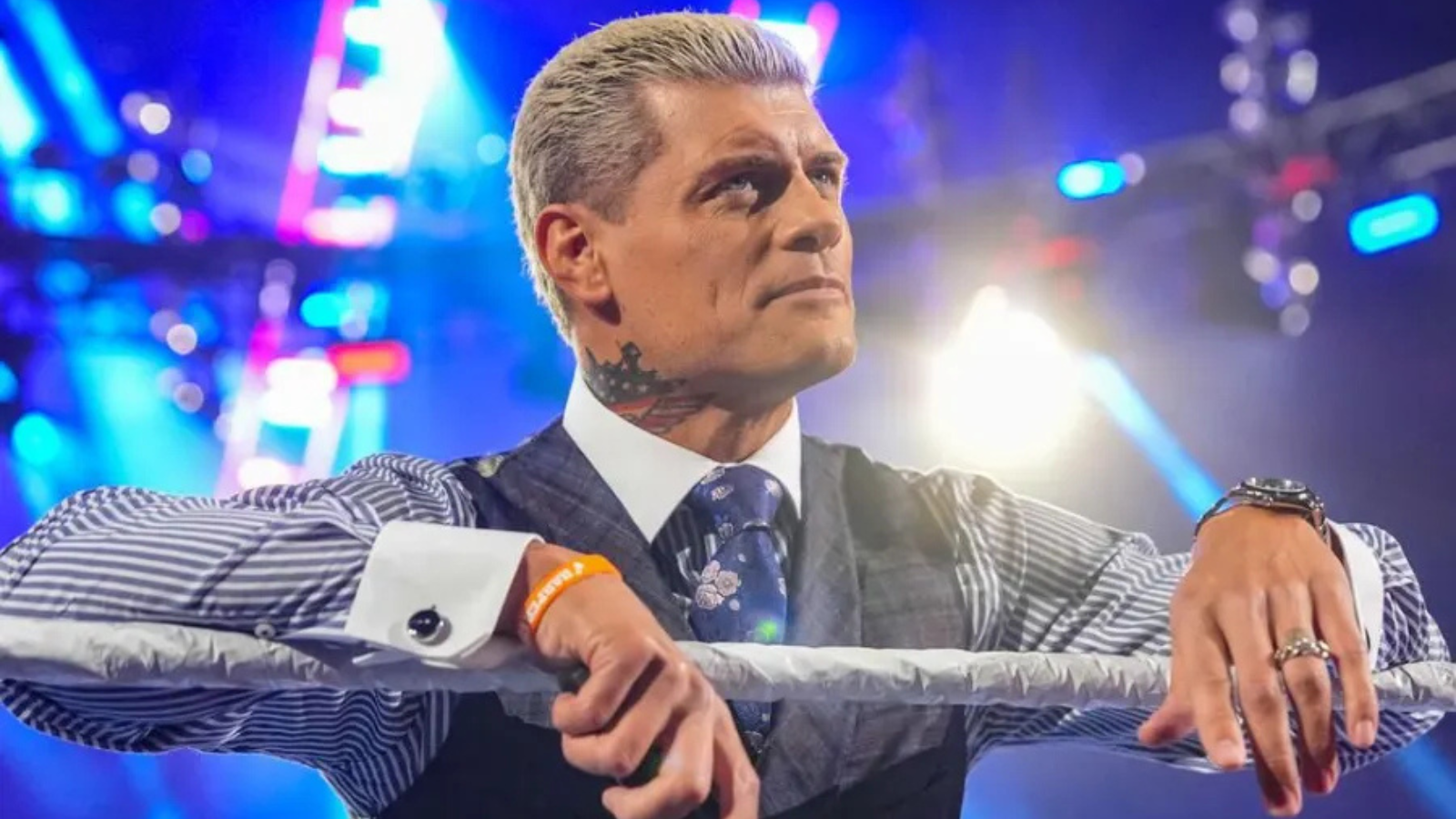
The tailored suits. The expensive watches. The image of the perfect champion.
But perfection can be faked.
If molding himself into the ideal blue-chip corporate champion was Cody’s intention, then he has succeeded. In a remarkably short time since his return, he climbed back to the very top of WWE.
But power at the top comes with expectations. And expectations bring pressure.
CM Punk warned him about that pressure during their infamous exchange, reminding him that even Dusty could never have prepared him for what comes with being the King.
And by this—he may have meant the inevitable change the championship brings out in the man who carries it. Because sometimes the crown doesn’t reveal who you are… it reveals who you’ve been hiding.
And if there is anyone left who knows how to bring that man to the surface, it might be Randy Orton.
Long before the American Nightmare tattoo, the suits and the blond hair, before the anthem and the adoration of the crowd, there was Legacy. A young Cody standing beside Randy, loyal to a fault, eager to prove he belonged in a world built by giants.
The Viper remembers exactly who Cody Rhodes used to be.
He remembers the ambition. The insecurity. The quiet hunger behind Cody’s eyes.
If Randy truly wants to break Cody, he won’t do it with an RKO.
He’ll do it with memory. He’ll remind him who he used to be.
Because when a man builds himself from the shadows of fathers, mentors, and legends, he eventually begins to wonder which pieces are truly his.
But that raises a far more uncomfortable question.
Who is Cody Rhodes when the story isn’t perfect?
Gunther once described himself and Cody as two sides of the same coin.
Perhaps he wasn’t wrong.
Because the ruthless competitor the world sees in Gunther—the one who dominates, punishes, and refuses to yield—lives in everyone, including Cody.
The difference is that Gunther never tried to hide it.
And if Randy Orton succeeds in forcing that truth into the open, the man the world believes they know may finally disappear.
Leaving something far more dangerous in his place.
Something that was never meant to be the hero.
Something that was never meant to win.
The American Nightmare.







Leave a Reply