


Cody Rhodes and Pat McAfee via WWE
The following content reflects my personal opinion and should be interpreted as such. Any views expressed here are solely mine and do not represent any official stance. This opinion piece is intended for entertainment and discussion purposes only, and should not be construed as factual information or professional advice. Reader discretion is advised.
WrestleMania is two days away.
And instead of talking about the story between Randy Orton and Cody Rhodes…we’re talking about Pat McAfee.
A 20-year story:
A mentor and his student.
Partners.
Friends.
Brothers in arms.
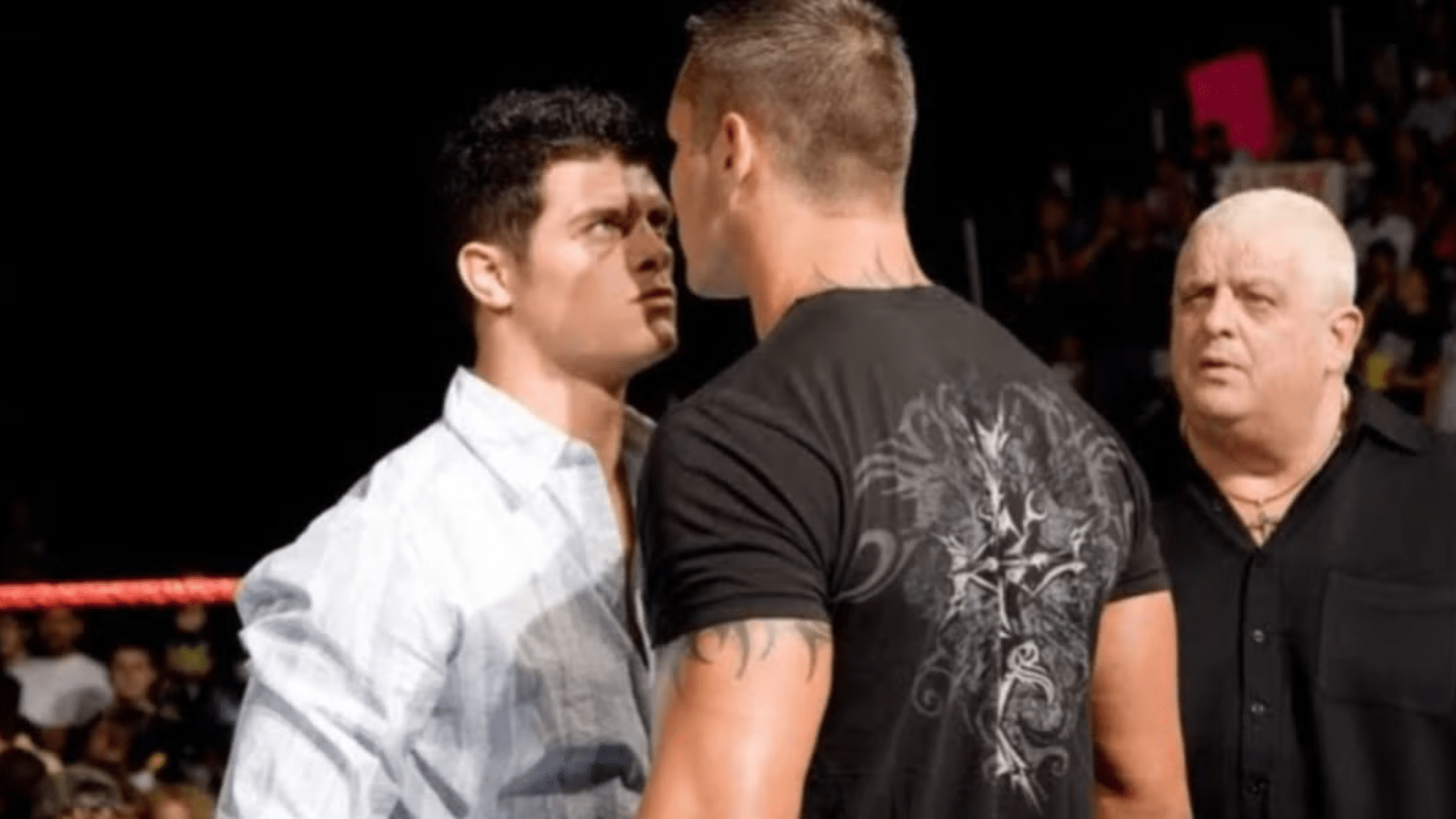
And somehow…
we’re talking about a former NFL punter inserting himself into something that was being built long before he ever stepped onto a football field.
And to be fair…the frustration makes sense. This is a story built on legacy.
Two bloodlines in professional wrestling—generations intertwined, fighting with each other and against each other for the same prize… the Undisputed WWE Championship.
We know the story.
Randy Orton chasing his 15th world title.
Cody Rhodes fighting for his first successful WrestleMania title defense—against someone who isn’t just an opponent, but a friend.
It’s a story that didn’t need anything extra.
No added noise. No outside interference.
Just time…and space…to play out the way it was always meant to.
And while McAfee is being positioned as the reason it feels off—he isn’t the problem.
He’s the symptom.
A symptom of something that’s been running through WWE for a while now.
Loud.
Reactive.
Desperate to be part of the moment.

Because Pat McAfee isn’t TKO.
He’s the IWC.
The problem isn’t Pat.
It’s what he represents.
An outsider who believes he understands the business better than the people who lived it for decades. He’s a reflection of a certain kind of fan—the one who remembers the “good old days.”
The Attitude Era.
When we were younger. More impressionable.
Watching larger-than-life wrestlers become something we could only imagine being.
And while McAfee has sat at the commentary desk, shaken hands, interviewed talent, and even built relationships within the locker room… has he ever truly become one of them?
Because lately, WWE has been accused of pulling the curtain back a little too far.
Stripping away the illusion.
The magic.
That thin line that made you question—just for a second—if what you were watching might actually be real.
And now… we’re watching people who have only ever consumed the product
tell us what it should be.
What it needs.
What’s best for it.
Sounds familiar?
Because maybe this isn’t just about Pat McAfee, TKO or even Ari Emanuel.
Maybe WWE is holding up a mirror…
and showing us exactly who we’ve become.
What happens when the audience becomes part of the story?
We’ve seen it before.
At WrestleMania 40.
A main event was already in place.
A blockbuster.
A spectacle meant to sell out stadiums—
The Rock versus Roman Reigns.
And to this day, people are still debating what could have been.
But that moment shifted everything.
Because it was the moment WWE realized something they couldn’t ignore—that Cody Rhodes had momentum.

Real momentum.
The kind that doesn’t just trend—it move the direction of a story.
#WeWantCody wasn’t just a hashtag.
It was a demand. And WWE listened.
Cody got his rematch.
He finished his story.
The audience became part of the process—and it worked.
But this…
this isn’t that.
This isn’t a moment where the audience is guiding the story.
This is a moment where the audience is crowding it.
Where every reaction becomes direction. Every opinion becomes influence. And when that happens…
..things get muddy.
The lines blur.
The story loses its shape.
Because when everyone is trying to be part of the moment—the moment itself starts to disappear.
And maybe that’s the point.
Maybe this isn’t just about Pat McAfee inserting himself into a story he doesn’t belong in. maybe this is WWE showing us what happens when the audience becomes too involved.
Because for years now, the line between the product and the people watching it has been slowing disappearing.
Fans don’t just react anymore.
They influence.
They redirect.
They insert themselves into the process—loudly, constantly, and in real time.
And WWE has allowed it.
They’ve opened the door.
Social media.
Press conferences.
Behind-the-scenes access.
They’ve made the audience feel like part of the show.
But moments like this expose the downside of that access.
Because when everyone feels like they have a say…the story starts to lose control.
And maybe this is WWE’s way of reminding us—that not every opinion needs to become a direction.
That not every reaction needs to shape the story.
That sometimes… the best thing the audience can do is step back and trust the process.
But here’s the reality WWE may not want to confront—you can’t invite the audience into the room…and then expect them not to speak.
You can’t build a product that thrives on engagement…and then push back when the engagement becomes influence.
Because as long as the doors remain open—the IWC will always walk through them.
And once that line is gone…it’s almost impossible to draw it again.




Leave a Reply