


Street Fighter promotional poster via Paramount
The following content reflects my personal opinion and should be interpreted as such. Any views expressed here are solely mine and do not represent any official stance. This opinion piece is intended for entertainment and discussion purposes only, and should not be construed as factual information or professional advice. Reader discretion is advised.
Before we even get into Street Fighter, can we talk about why I’m sitting through ten minutes of commercials at the movie theater?
And I’m not talking about movie trailers. I’m talking about actual commercials. At one point, I genuinely felt like I was sitting in my living room watching TV. Granted, I was a little high, but still. Has it really been that long since I’ve been to the movies?
Anyway, I digress.
As someone who grew up in the 90s, Street Fighter was one of those movies I was genuinely looking forward to seeing. And if there’s one thing I can say about this latest adaptation of the beloved Capcom franchise, it’s that the film understood the assignment.
It was campy. It was ridiculous. It was nostalgic. And most importantly, It was FUN.

Directed by Kitao Sakurai, Street Fighter doesn’t shy away from the absurdity that made the original video game franchise so entertaining in the first place. Instead, it embraces it, delivering a comedic, action-packed experience that feels like a throwback to a time when video game adaptations didn’t necessarily have to take themselves so seriously.
One of the first things that stood out to me was the soundtrack. The inclusion of Soundgarden’s “Black Hole Sun” was a particularly welcome choice, adding to the film’s already heavy dose of ’90s nostalgia.
But it was 4 Non Blondes’ “What’s Up?” that really caught my attention.
Now, of all the songs from the ’90s that could have been used to bring this movie full circle, THIS was the one they chose?
And somehow…it worked.
It was a hilariously brilliant creative decision by Sakurai. Because what started as an unexpected song choice ultimately became something much bigger. It became the glue that solidified the brotherhood between Ryu and Ken Masters. Two men. Two very different personalities. A friendship tested by everything happening around them. And somehow, through all the fighting, the chaos, and the ridiculousness of it all, a song about questioning what the hell is going on became the one thing that brought them back together.
Not another fight.
Not another victory.
Just a song.
And maybe that’s what made the moment work so well. Because underneath all the exaggerated action, Street Fighter never really lost sight of the relationship at the center of its story.
Ryu and Ken.

The comedic timing was another pleasant surprise. There is something refreshing about a movie that understands just how ridiculous its premise can be and isn’t afraid to lean into it. And that’s what made the humor work. Street Fighter wasn’t trying to convince us that any of this was supposed to be taken seriously. It embraced the antics, leaned into the campiness, and allowed the audience to enjoy the experience for exactly what it was.
But let’s talk about the fighting. The fight choreography was well executed and entertaining, with several sequences that immediately caught my attention. One of my personal favorites was the showdown between Balrog, played by Curtis “50 Cent” Jackson and Noah Centineo’s Ken.
And can we discuss how Juli and Vega really tried to jump my girl Chun-Li?
Because excuse me?!
Callina Liang’s portrayal of Chun-Li was particularly interesting to me. As someone who enjoyed the video games growing up but wasn’t necessarily familiar with every detail of the franchise’s lore, I appreciated that the movie gave us enough of her backstory to understand her motivations without making her the center of the entire film.
Her history with M. Bison wasn’t just some convenient subplot thrown into the movie to give her a reason to fight. It explained why she was willing to take an oath, get close enough to the man responsible for the death of her father, and ultimately delete him. And while some longtime Street Fighter fans seemed more concerned with the fact that Liang’s thighs weren’t as thick as her video game counterpart, I was more interested in whether she could capture the essence of Chun-Li.
And in my opinion, she did.
Chun-Li was still THAT girl.
However, one character I wish we had gotten more of was Juli, portrayed by Rayna Vallandingham. Now, THIS was a character that caught my attention. Vallandingham’s take was easily one of my favorites, but I couldn’t help feeling like there was a much bigger story waiting to be told. Her connection to Cammy and the other Dolls is something I hope that can be further explored at another time. Because while we were introduced to these characters and given a glimpse of their place within Bison’s operation, there was still so much more I wanted to know.
And maybe that’s intentional.
Now, of course, as someone who enjoys analyzing and covering professional wrestling, there were two performances I ws particularly interested in seeing.

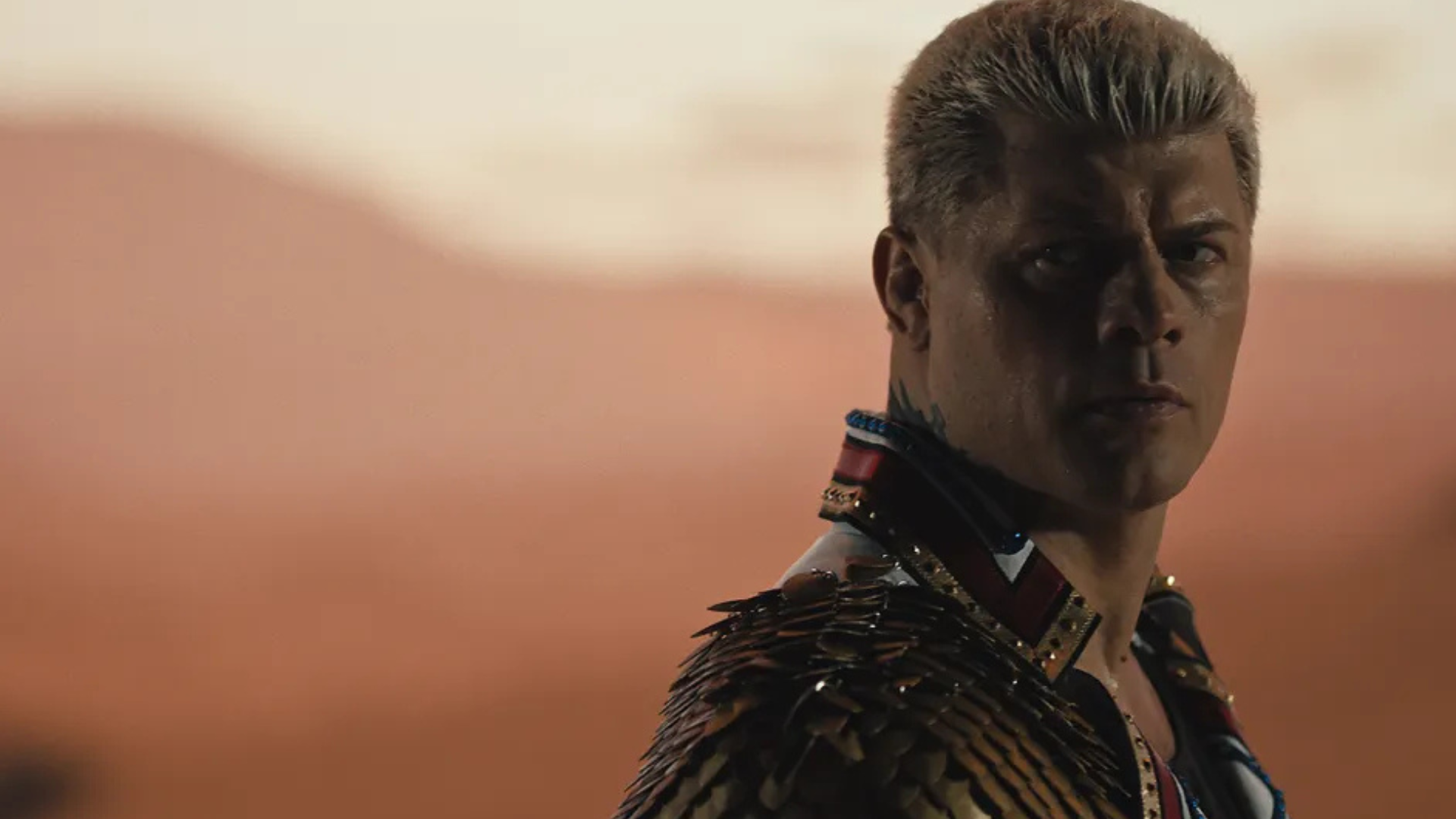
Cody Rhodes as Guile.
And Roman Reigns as Akuma.
Let’s start with Cody.
Long before the film premiered, we had already been introduced to his interpretation of the American hero through several promotional clips. And if those clips told me anything, it was that Guile wasn’t going to be some forgettable cameo thrown into the movie simply because Cody Rhodes happens to be one of the biggest names in professional wrestling.
There was clearly more to the character.
And as the movie progressed, it became easier to understand why Guile was given more prominent role and why Cody’s involvement became such an important part of the film’s marketing campaign.
A wise decision, by the way.
And while wrestling and Hollywood are two very different forms of entertainment, they share one fundamental responsibility: making the audience believe in the person standing in front of them.
Now, Roman Reigns?
Roman had a different assignment entirely.
Akuma isn’t a character who needs to entertain you with witty dialogue or win you over with his personality. HIs presence alone is supposed to communicate danger. And for someone making another significant step into Hollywood, Roman understood exactly what was required of him. Because when Akuma finally got his hands on Ryu, that man was getting WORKED. I’m talking about Akuma beating the absolute hell out of him.
And that’s where Roman’s portrayal became effective. He didn’t need an excessive amount of screen time to make his presence felt. The character’s physicality and intensity were enough to establish him as a legitimate threat. And judging by how the movie ended, I don’t believe we’ve seen the last of him.
With the ending and post-credit sequence teasing the arrival of Sagat and Bison’s kidnapping of Akuma, the film leaves the door wide open for a continuation of the story.
And personally? I’d welcome it.
But beyond the performances, the fighting, and the ridiculousness of it all, what made Street Fighter work for me was something much simpler. It reminded me of why I loved the franchise in the first place.
The characters.
The fighting.
The music.
It was never supposed to be complicated.
And maybe that’s something Hollywood needs to remember when adapting beloved video games franchises. Not every film needs to reinvent the characters, deconstruct the source material, or attempt to become something bigger than what made audiences fall in love with it in the first place.
Sometimes, the best thing a movie can do is understand its audience.
Understand the assignment. And deliver.
Street Fighter was campy, ridiculously fun and unapologetically nostalgic.
And for this 90’s kid? That was more than enough.









Dora
I stilll need to watch but now I want to watch it more!!!!!